Introduction: Old vs New
As Google releases Nano Banana Pro, many creators are curious how it stacks up against the original Nano Banana 1. The first Nano Banana made AI image generation accessible with fast results, but it had its quirks and limitations. Now Nano Banana Pro promises major upgrades in fidelity and intelligence. This side-by-side comparison will break down the key differences, so you know what’s changed and what it means for your projects.
We'll compare Nano Banana 1 and 2 in several areas: image quality and resolution, prompt understanding and logical accuracy, text rendering, speed, and ideal use cases. If you've been using Nano Banana 1, you'll discover whether upgrading to Nano Banana Pro is worth it. And if you're new to both, this comparison will help you choose the right version for your needs.
Feature-by-Feature Differences
- Image Resolution & Quality – Nano Banana 1 generates images typically at 1024×1024 (1K) resolution, suitable for web but not high-res print. Nano Banana Pro natively produces 2K images (with optional upscaling to 4K) and richer 16-bit color. The result: NB Pro outputs are far sharper and more detailed, whereas NB1 images might appear soft or pixelated when enlarged.
- Prompt Understanding – NB1 is straightforward: it does best with simple prompts and tends to follow them literally, but complex instructions could confuse it. NB Pro, thanks to a smarter “planning” stage, can interpret and break down complicated prompts or scenes. It understands context and relationships much better, so it’s less likely to leave out details or arrange elements illogically.
- Logical & Spatial Reasoning – NB1 would often falter with tasks requiring understanding of physics or spatial logic (e.g., reflections, symmetrical layouts, counting objects). NB Pro has an improved reasoning module, meaning it can handle a scene like “a cat standing on a chair next to a mirror” and actually get the reflection and positioning right. It’s far more reliable for complex compositions.
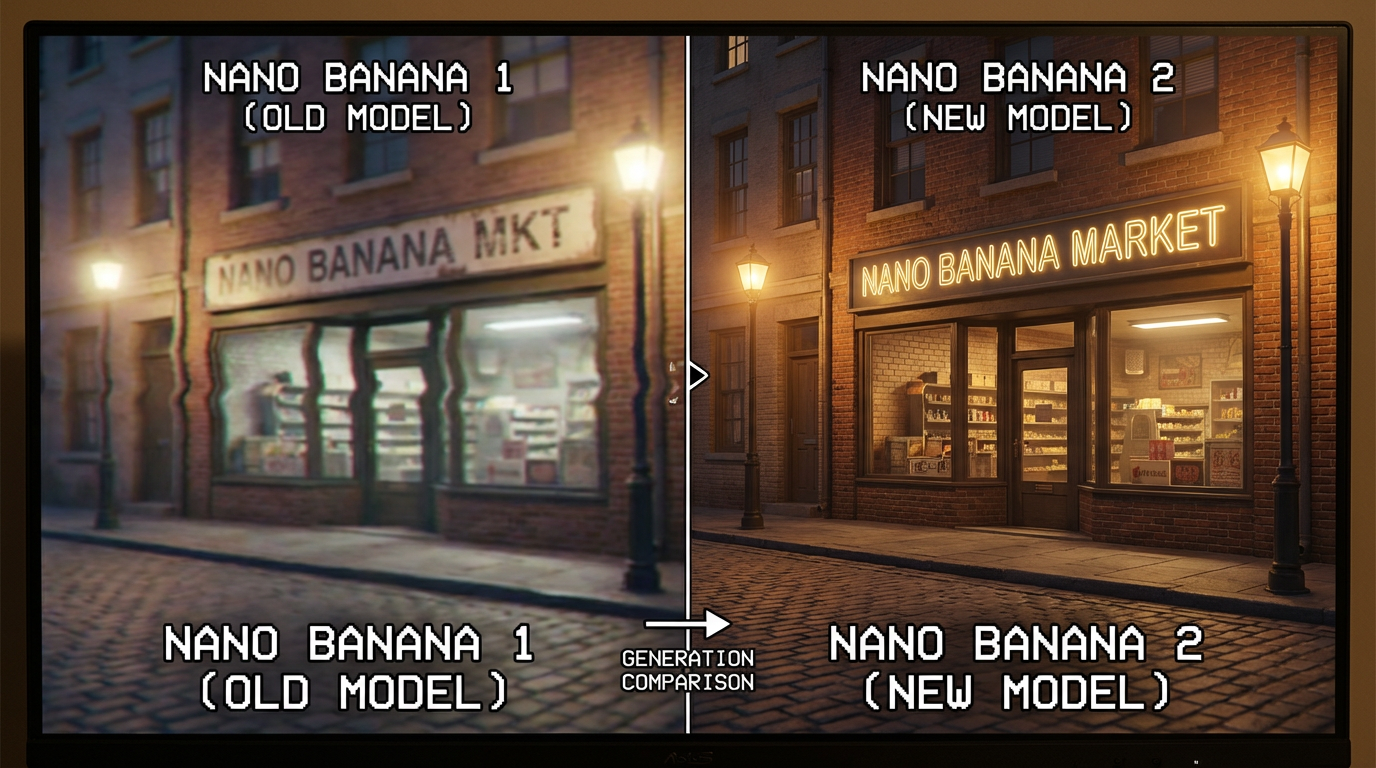
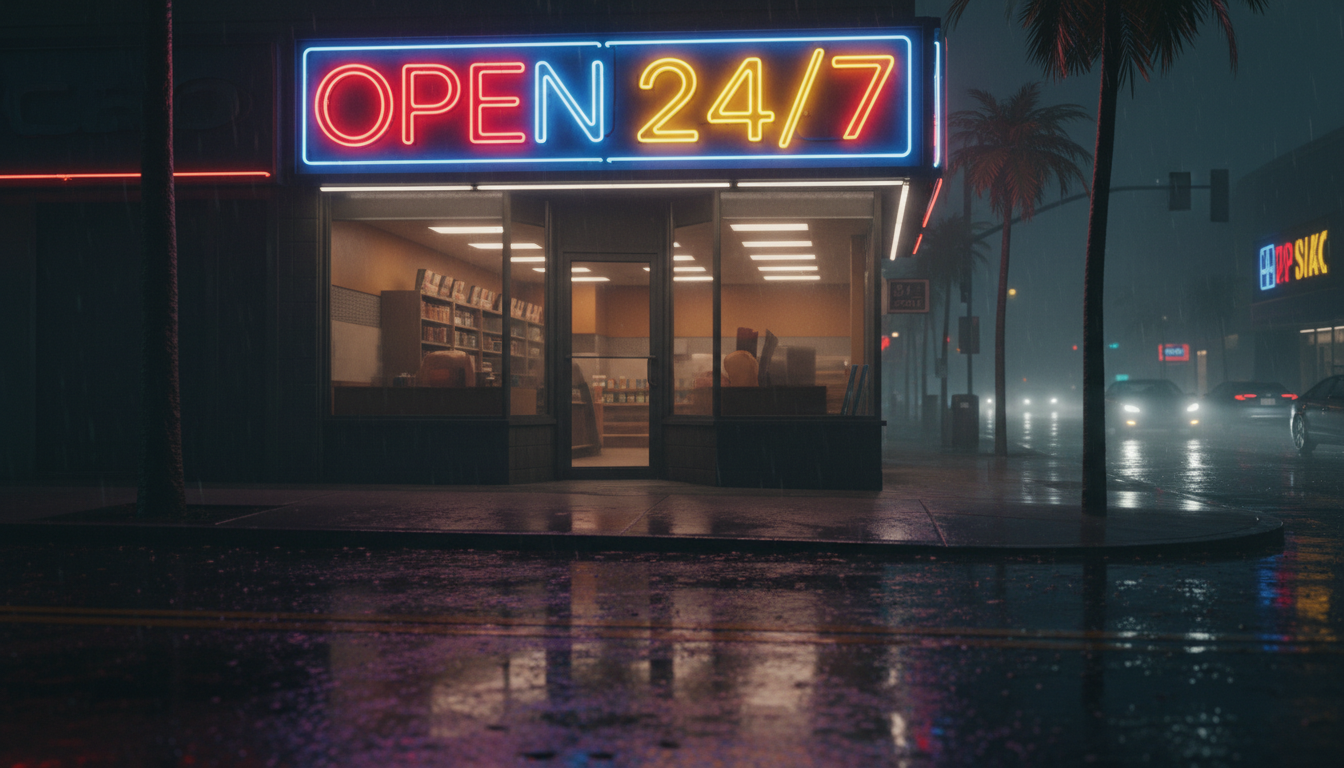
- Text in Images – NB1 struggled badly with text, usually producing gibberish if you asked for writing in the image. NB Pro is a huge leap forward here: it can generate clear, correct text (for example, legible signs, book covers, or interface mockups). If your project needs AI to generate images with labels or readable text, NB Pro is practically essential.
- Speed and Performance – Both models are optimized for speed. NB1 was very fast (often ~10-15 seconds per image), and impressively NB Pro manages to stay in roughly the same range (~10 seconds per full 2K render in tests). Despite doing more complex processing under the hood, NB Pro doesn't slow you down, and it may even reduce your total workflow time by getting images right more often on the first try.
- Consistency Over Multiple Images – NB1 could maintain a consistent look to a degree (especially with simpler prompts), but if you tried generating a series, you might see variations or errors creeping in between images. NB Pro is built for consistency: you can generate multiple images of a character or concept and expect them to have a coherent style, colors, and details across the board. This is great for multi-image projects like comic panels or branding sets.
- Underlying Architecture – Nano Banana 1 runs on a single diffusion model (codename Gemini 2.5 Flash) focusing on speed. Nano Banana Pro introduces a two-part system: a reasoning AI (the “brain”) and a high-fidelity diffusion model (the “hand”). This new architecture is why NB Pro can 'think through' a prompt first and then render it, whereas NB1 just tried to draw in one go. This fundamental change gives NB Pro its advantage in complex tasks.
Which Model Should You Use?
Both versions have their place, depending on your needs:
- Nano Banana 1 – Ideal for quick, simple image generation when speed matters more than perfection. Great for social media graphics, basic concept art, or rapid prototyping. NB1 offers fast results and is very beginner-friendly, though the outputs may need tweaking or have minor errors.
- Nano Banana Pro – Best for professional or complex projects that demand high fidelity. Use NB Pro if you need ultra-sharp or print-quality images, accurate details (like correct text or logical scenes), or if your prompts were too challenging for NB1. NB Pro shines for detailed artwork, graphic design pieces, technical illustrations, and any scenario where quality and accuracy are paramount.
On GenAIntel, you can try both models side by side. Many creators start with Nano Banana 1 for brainstorming and then switch to Nano Banana Pro when refining the concept. If Nano Banana 1 is a quick sketch artist, Nano Banana Pro is a master designer – a bit more effort, but producing much more polished results.
Want to test Nano Banana 1 and Nano Banana Pro for free?
Create AI images with 100+ models side-by-side with your own prompts on GenAIntel.
Visual Output Comparison
Let's compare some outputs from Nano Banana 1 vs. Nano Banana Pro using identical prompts. These examples show how much improvement the new model brings:
Prompt: A street storefront with a large neon sign that reads 'OPEN 24/7' in clear letters. Nighttime scene, rain-soaked sidewalk reflecting the sign's glow.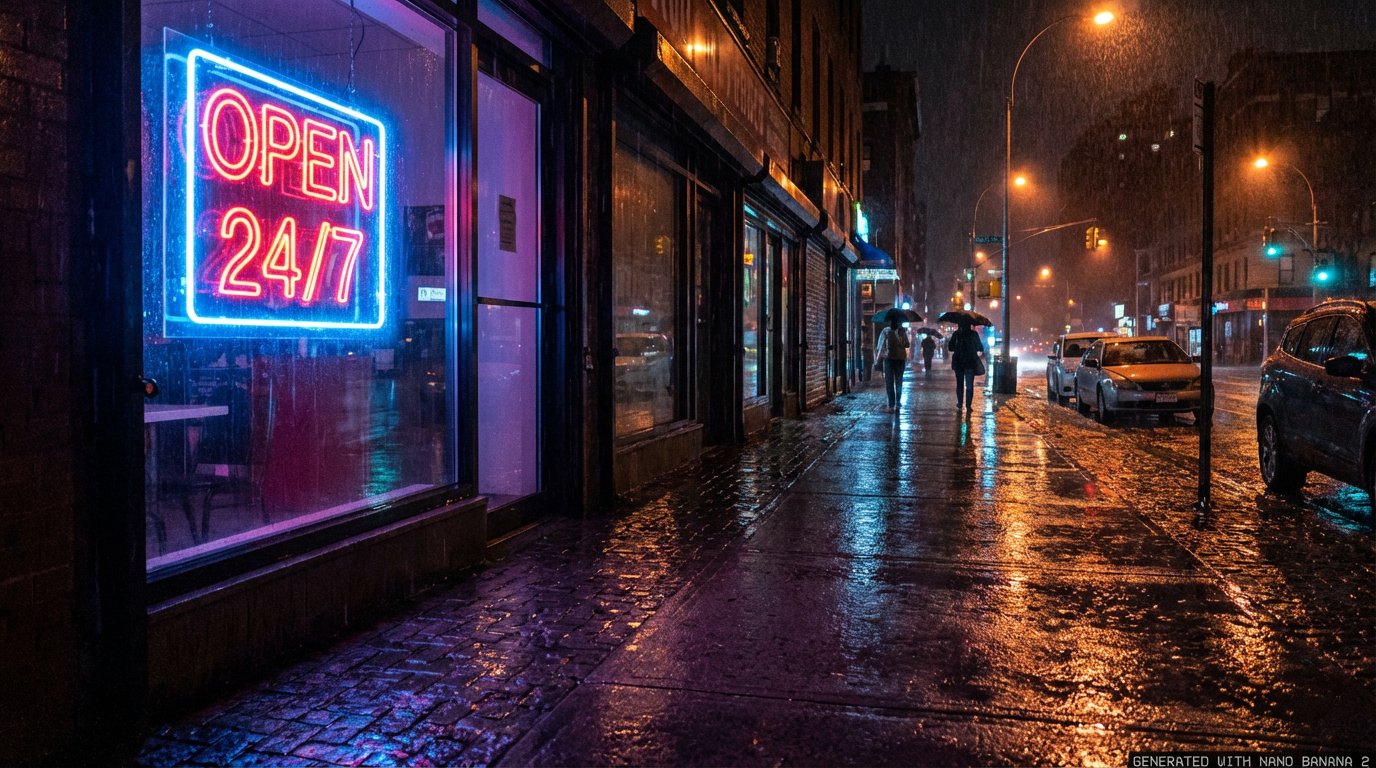
Prompt: A panoramic wide-angle shot of a city skyline at sunset, 16:9 aspect ratio. Skyscrapers with glass windows reflecting the sun.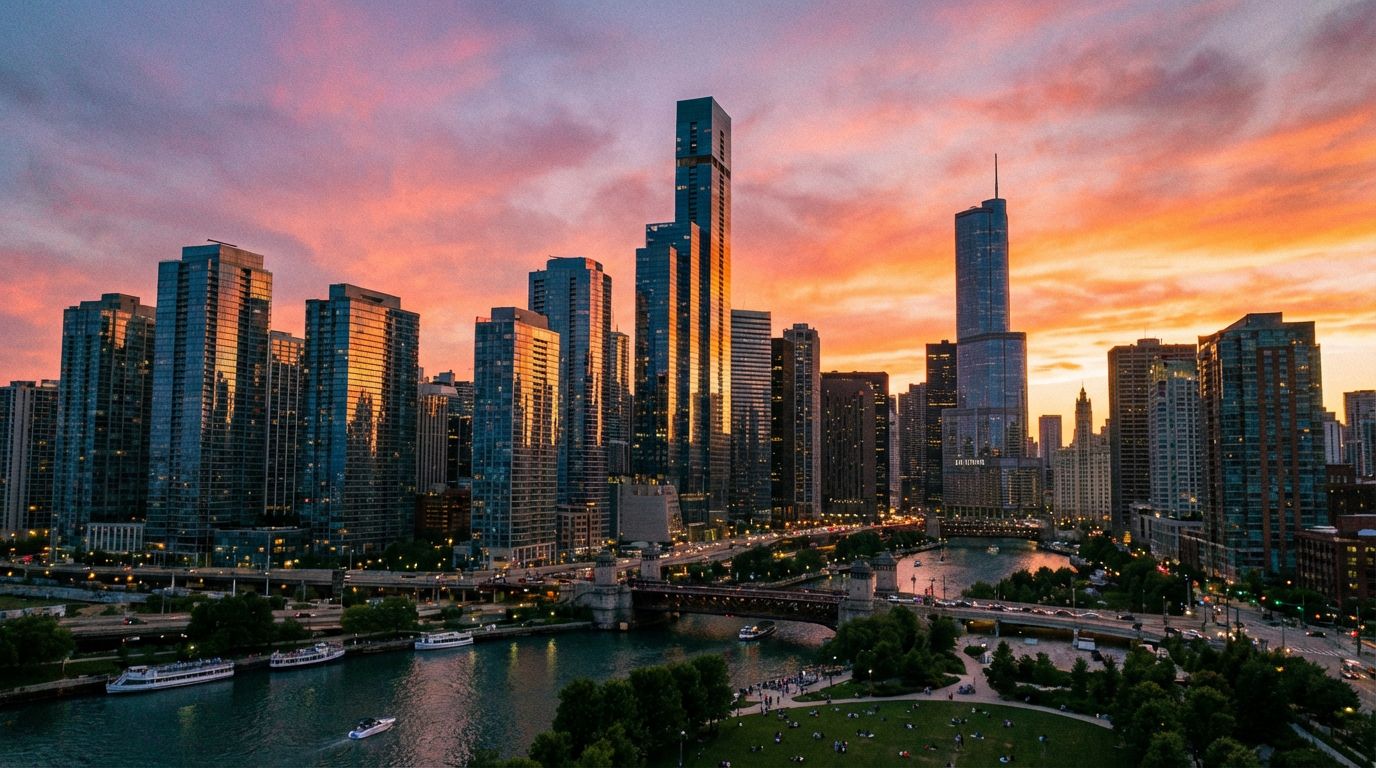

Prompt: A person holding a mirror that reflects a different scene (a beach) while the room around them is an office. Highly detailed and realistic.

Conclusion
Nano Banana Pro is a significant upgrade over Nano Banana 1 in almost every way. For quick, rough visuals or casual uses, the original model still works fine. But if you require higher quality, accuracy, and creative control, Nano Banana Pro delivers results that were previously impossible with version 1. The good news is that you don’t have to guess – you can test both models on GenAIntel and see the differences firsthand. The choice ultimately depends on your project needs, but it’s clear that Nano Banana Pro represents the new gold standard for AI image generation.